
If you are holding off on buying because you expect prices to fall further, it is worth looking at what the numbers actually say rather than what the headlines say. Right now the two are pointing in different directions depending on where you are looking.
Figures current as at 12 August 2026. Property data moves quickly, so check the sources before relying on any number here.
The national market is falling. That part is real.
National dwelling values fell 0.4% in June 2026. That was the third consecutive monthly fall and the largest single-month drop since December 2022, leaving the national index 0.7% below its March peak.[1]
Capital city values fell 1.3% across the June quarter, led by Sydney at 3.2% and Melbourne at 2.6%.[1] Sales volumes in the capitals are running around 16% below where they were a year ago.[1]
So if you have been reading that the market is soft, that is not media pessimism. It is accurate for most of the country.
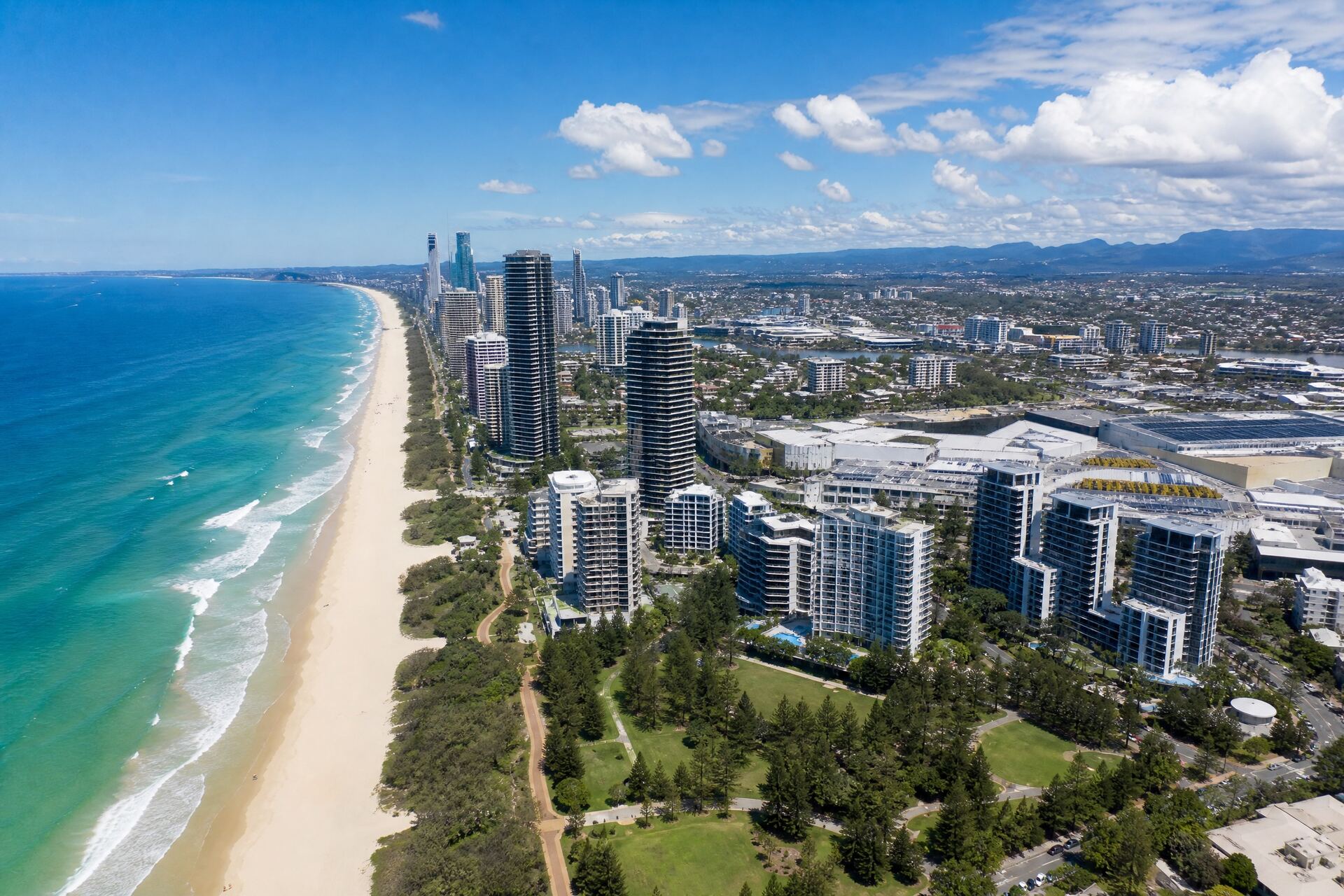
The Gold Coast is not doing the same thing
The Gold Coast median dwelling value was $1.182 million in July 2026, up 0.05% for the month, in a month when the national figure fell 0.3%.[2] Year on year the Gold Coast is up roughly 10 to 12%, though the pace has clearly moved from boom to steady.[2]
Perth, Adelaide and Brisbane have also held up better than the southern capitals, in each case where housing is genuinely undersupplied relative to demand.[1]
Which means the question "should I wait for prices to drop" has a different answer depending on where you are buying. In Sydney, prices are falling and waiting has so far been rewarded. From Broadbeach to Cabarita, you would have spent the last twelve months waiting for a fall that has not arrived.
Do not assume rates have peaked
The Reserve Bank held the cash rate at 4.35% on 11 August 2026, after raising it by 75 basis points across the first half of the year.[3]
It is tempting to read a hold as the end of the cycle. The Board's own statement does not support that reading. It describes headline inflation as still too high and trimmed mean inflation as elevated and little changed from the March quarter, and it states plainly that it will do what is necessary to bring inflation back to target, including raising the cash rate further if upside risks materialise.[3]
Anyone telling you with confidence that rates are done, or that cuts are coming on a particular date, is guessing. The Reserve Bank has not said that.
What this actually means if you are buying here
The honest position is that nobody knows where the bottom is, including us. What you can do is stop treating "wait" as a free option, because it is not.
- Waiting has a cost in a market that is not falling. On the Gold Coast, a year of waiting has meant paying more, not less.
- Waiting has a benefit in a market that is falling. In Sydney and Melbourne, it has.
- Your borrowing capacity moves too. If rates rise again, what you can afford falls, and a cheaper house you cannot borrow against is not a win.
- The bottom is only visible afterwards. By the time the data confirms it, the buyers who were waiting alongside you are all bidding at once.
The more useful question
Instead of asking when to buy, ask whether the specific property is right and whether you can hold it comfortably if rates go up again rather than down.
An A-grade property in a tightly held pocket behaves very differently in a downturn to a C-grade one bought at the same time. Scarcity is what protects value when the wider market softens, and the strip between the ocean and the hinterland here has very little of anything left to build on.
If you are finance-ready and you find the right property, the timing question matters less than most buyers think. If you are not finance-ready, no amount of market timing will help you.
Sources
- Cotality (formerly CoreLogic) Home Value Index, national and capital city results to June 2026, reported via Property Update, Australian housing market update.
- Gold Coast median dwelling value, July 2026, reported via NPA Group, Gold Coast house prices defy national slump.
- Reserve Bank of Australia, Statement by the Monetary Policy Board, 11 August 2026.