
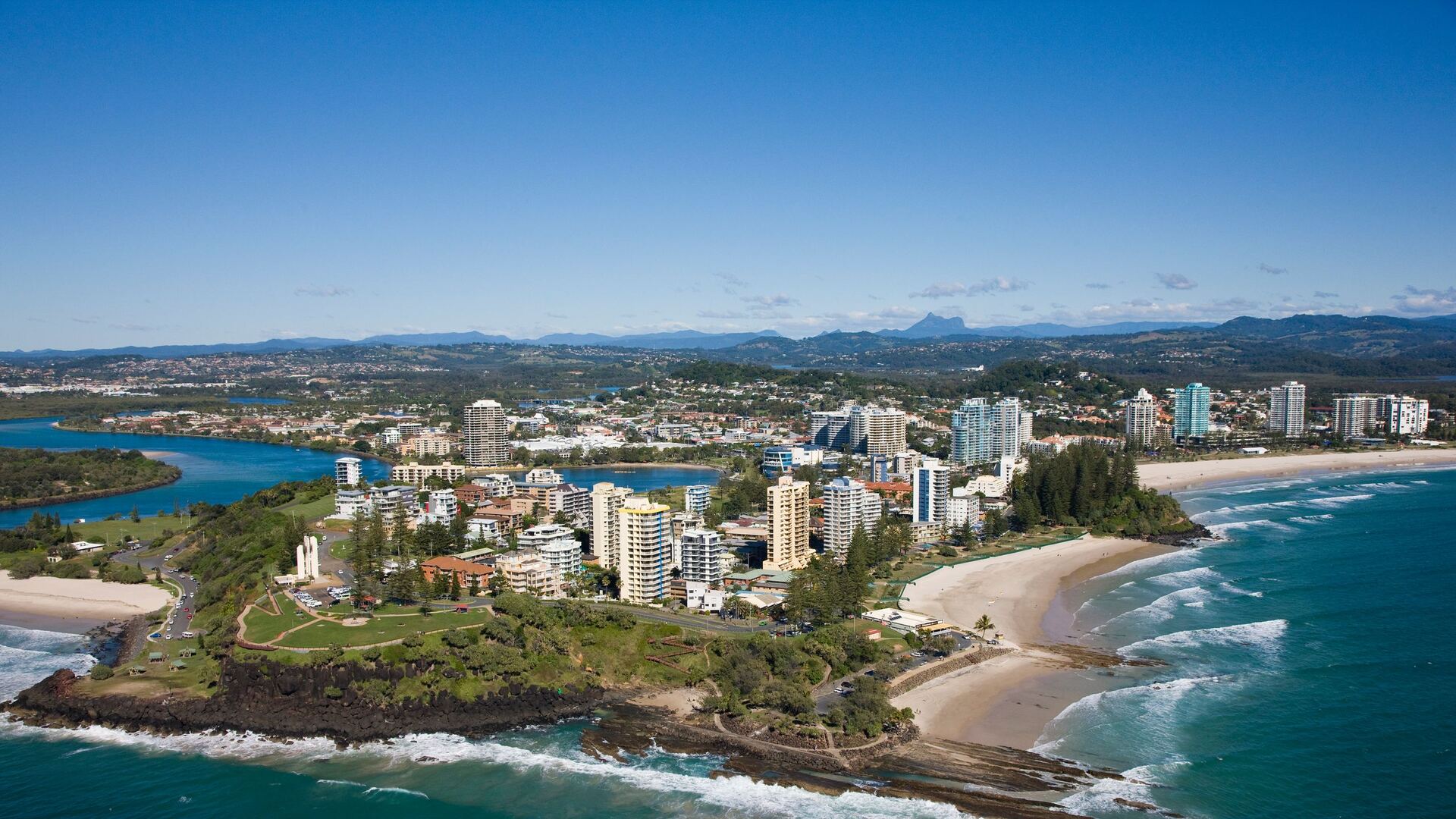
Moving into the second half of 2026, the Gold Coast and Tweed Coast are doing something different to the rest of the country. National headlines describe a housing downturn, and for most of Australia that is accurate. The premium coastal corridor from Broadbeach to Cabarita Beach is not following it.
Figures current as at 7 August 2026, with sources listed at the foot of this article.
A genuine two-speed market
Nationally, dwelling values fell 0.4% in June 2026, the third consecutive monthly fall.[4] Sydney fell 3.2% across the June quarter and Melbourne 2.6%.[4]
The Gold Coast median dwelling value was $1.182 million in July 2026 and rose 0.05% for the month, while the national figure fell 0.3%.[5] Over the year it is up in the order of 10 to 12%, although the pace has slowed markedly from the boom conditions of the past few years.[5]
Within the Gold Coast the split continues. Softness is concentrated in mortgage-belt suburbs and among buyers whose borrowing capacity has been squeezed.[2] The premium coastal markets, particularly above $3 million, have stayed resilient, largely because those buyers are transacting with cash or substantial equity and are not especially sensitive to the cash rate.[2]
Units are doing the heavy lifting
With house prices in the premium suburbs beyond many buyers, demand has moved decisively toward apartments. The development pipeline has followed, shifting away from small investor stock toward larger two and three bedroom apartments aimed at owner-occupiers and downsizers.[1]
The Gold Coast median unit price reached $956,000 in late 2025, overtaking Sydney for the first time.[1] Vacancy rates sit near 1.2%, with gross rental yields averaging around 5.3% for units.[1]
The Tweed Coast: supply is the whole story
Across the border, Kingscliff, Casuarina and Cabarita Beach continue to perform, underpinned by a shortage of new housing rather than by speculative demand.
The Tweed Coast median house price sits at $1.7 million with units at $1.09 million.[3] House price growth has moderated to a sustainable 1.8% annually while unit prices have risen 18.2%.[3] There is very little new residential development scheduled across 2026 and 2027, which is the main reason prices here have held.[3]
| Area | Median house | Median unit | What is driving it |
|---|---|---|---|
| Gold Coast (all dwellings) | $1.182M[5] | $956K[1] | Holding while the nation falls |
| Burleigh Waters | $1.6M[1] | $870K[1] | Family demand, lifestyle appeal |
| Tweed Coast | $1.7M[3] | $1.09M[3] | Severe undersupply |
One note on reading these. The $1.182 million Gold Coast figure is an all-dwellings median, which blends houses and units. House-only medians for the city are quoted higher, around $1.3 million, depending on the provider and the period. They are different measures rather than contradictory ones, and it is worth checking which one you are being shown.
Outlook, with the caveats it deserves
Forecasters have expected dwelling price growth between 7% and 11% for the Gold Coast across 2026.[1] Those forecasts were made before the national correction broadened, so treat them as one view rather than a base case.
The Reserve Bank held the cash rate at 4.35% on 11 August after raising it 75 basis points across the first half of the year, and has explicitly kept the option of raising further if inflation does not behave.[6] That is the main risk to any Gold Coast forecast.
The structural factors have not changed. There is very little developable land left between the ocean and the hinterland, migration into South East Queensland continues, and infrastructure spending ahead of the 2032 Brisbane Olympics is ramping up.[1]
What that adds up to is not "prices cannot fall here". It is that the supply side of this particular market is tighter than most, which is why it has so far behaved differently to Sydney and Melbourne. If you are waiting for a significant correction in the premium corridor specifically, the last twelve months have not delivered one.
Sources
- ENAYBL (2026). Gold Coast Property Market Predictions For 2026. enaybl.com.au
- realestate.com.au (2026). Gold Coast property cooldown: the suburbs where prices are surging and falling. realestate.com.au
- PRD Real Estate (2026). Tweed Coast Property Market Update, 1st Half 2026. prd.com.au
- Cotality (formerly CoreLogic) Home Value Index to June 2026, via Property Update.
- Gold Coast median, July 2026, via NPA Group.
- Reserve Bank of Australia, Monetary Policy Decision, 11 August 2026.